For all the Saints
a
general introduction to the churches of South Elmham and
Ilketshall

www.suffolkchurches.co.uk - a journey through the churches of Suffolk
|
For all the Saints |
|
|
||
www.suffolkchurches.co.uk - a journey through the churches of Suffolk |
||

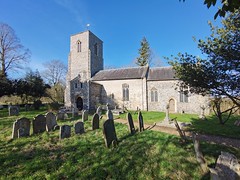
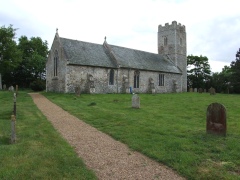


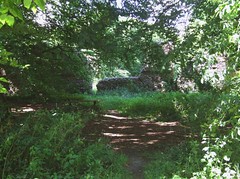
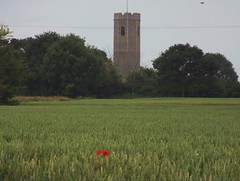


Follow these journeys as they happen at Last Of England Twitter.
| The Saints are a group of twelve
parishes in north-east Suffolk, in the area between
Bungay and Halesworth. They are all styled either South
Elmham or Ilketshall. The area is wide, remote, scattered
and by tradition lawless. Between them, South Elmham and
Ilketshall have eleven medieval churches, as well as the
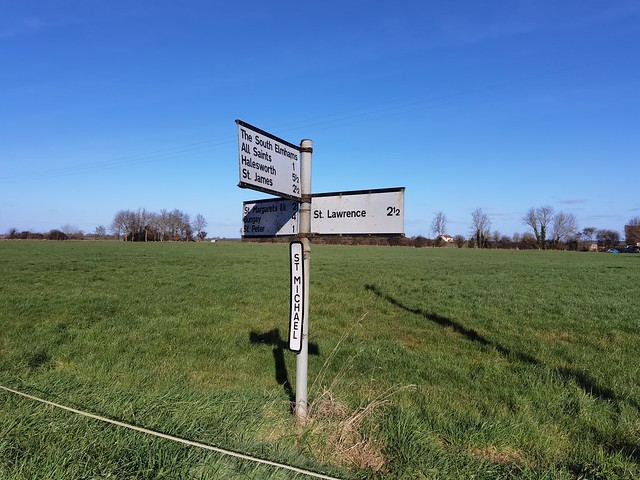
ruin of a chapel. The four Ilketshall churches are St Andrew, St John, St Lawrence and St Margaret. The first three
are to the east of the Roman Stone Street, now the A144.
St Margaret is to the west, among the South Elmhams.
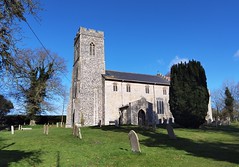
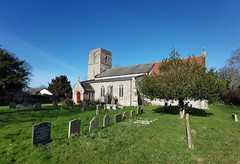
There are seven South Elmham churches. These are All Saints, St George, St James, St Margaret, St Mary, St Michael and St Peter. Another, St Nicholas, has now gone, its
site marked by a cross. The parish was combined in modern
times with that of All Saints. St George's village is
called St Cross, a corruption perhaps of the medieval St
George Sancroft. St Mary is in the village of
Homersfield. The churches of
the Saints have a subtle charm, one that is perhaps not
readily apparent to the casual visitor. Here, there are
no famous monuments, no historic rood screens. And yet
the fragmentary survivals are fascinating and even
haunting, for example the spectacular wall paintings at
Ilketshall St Andrew, the Easter Sepulchre and dado
panels at South Elmham St Margaret, the old glass and a
couple of bench ends at South Elmham All Saints. There is
also the ruin of what is usually referred to as South
Elmham Minster, a church in the woods in the parish of St
Cross, half a mile from the nearest road, set in the
middle of an ancient, possibly Roman, fortification. It
was probably not a Minster, but its origins are shrouded
in mystery. It is possible to visit all the churches in one day, and indeed this becomes something of a pilgrimage. Setting out from Bungay, the shortest tour of the churches and the minster ruin may be made by bicycle or car in this order: St John, St Andrew, St Lawrence, St Margaret Ilketshall, St Peter, St Michael, St James, All Saints, St Margaret South Elmham, South Elmham Minster, St George, St Mary, and then back to Bungay via Flixton. This is a journey of about thirty miles, and about a mile of this will need to be done on foot. The distance will be reduced by a third if you miss out St Lawrence and St James. If you are walking, there are plenty of footpaths across the fields. And to the great credit of these parishes, all the churches are open every day. On foot or on a bike it is a challenge at once both physical and mental, for the winds always sweep across this flat landscape, and a decent OS map is essential if you are to find them all. In winter the landscape can be unfriendly, for this is a lonely place with few people living here outside of the two St Margarets and Homersfield. The wide parish of St Peter has barely ten houses. The narrow lanes can become ratruns, as the occasional speeding local carves a shortcut to Bungay or Halesworth. Cycling the Saints may perhaps not be considered a pleasure, but it is an adventure. Simon Knott, February 2022 Follow these journeys as they happen at Last Of England Twitter. |



|
||||||||||||||||||||||||||||||||||||||||||||||||||||||